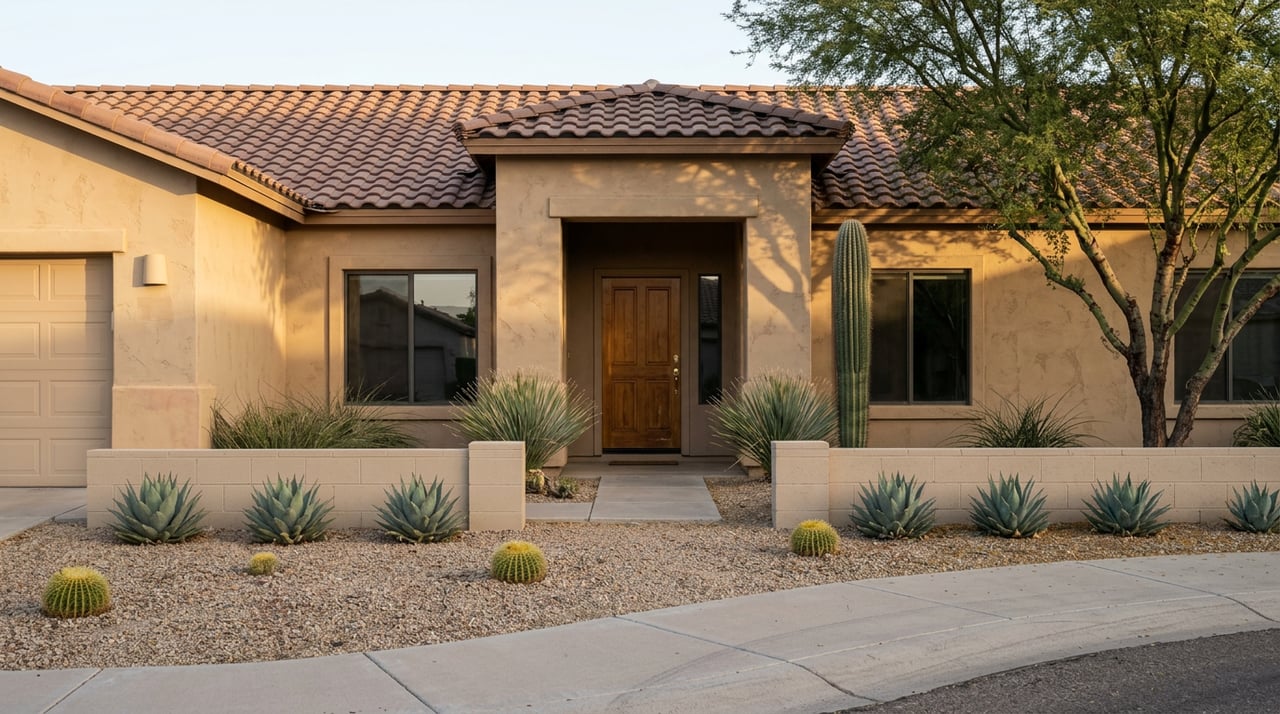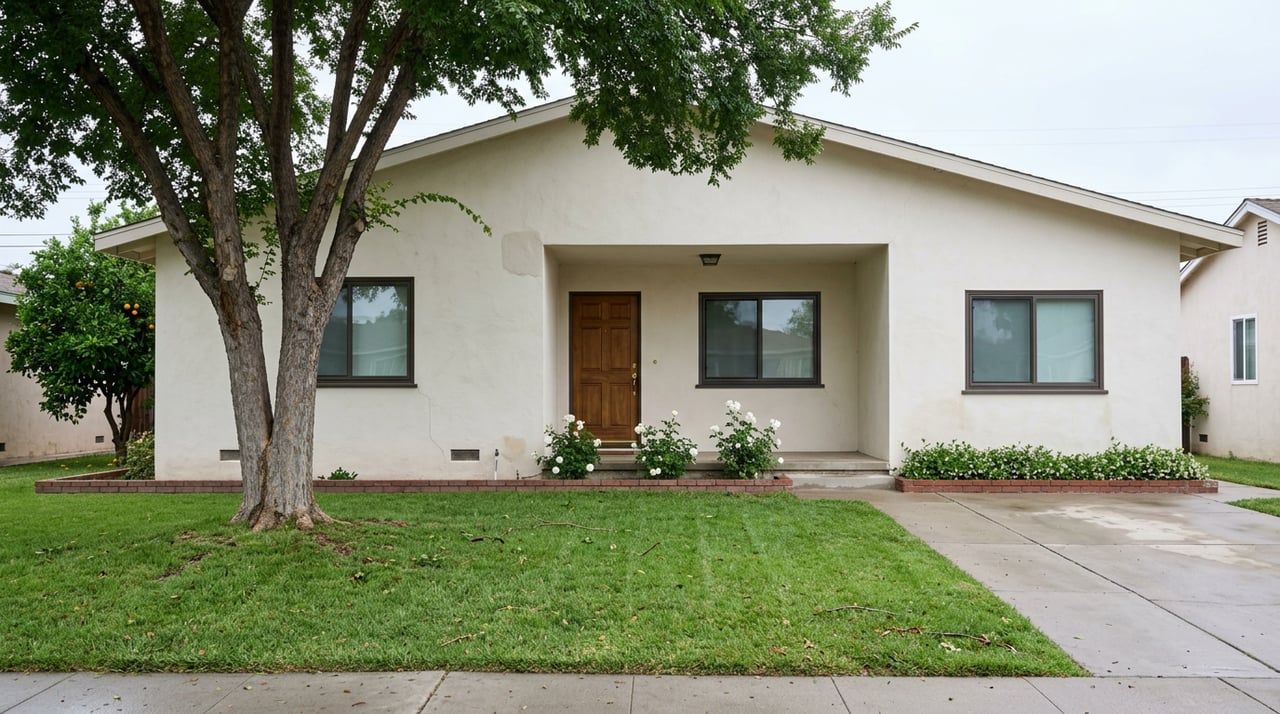
Drive a few blocks off Indian School Road this summer and you will pass a demolition placard on a lawn that still has decades-old citrus trees standing over it. Local outlet MyHyperLocalNews counted fourteen Arcadia homes with demolition permits pulled in the first few months of 2026 alone, and Peter Flynn, president of the Arcadia Camelback Mountain Neighborhood Association, offered a candid read on what that pace means for the neighborhood he represents.
"We see remodeling/redevelopment of homes within the Arcadia area as being a positive and natural consequence of Arcadia being one of the most desirable areas of Phoenix to live in."
Half a mile away, a different kind of sale is closing: a fully updated 1958 ranch, kitchen and baths redone, original footprint intact, listed and gone in under six weeks. Both properties are being described by agents, appraisers, and buyers as good real estate. That should not be possible if the value of a house is mostly a function of what has been done to it. It is possible because in Arcadia, the finish level of the structure is not what's actually being priced. The lot underneath it is.
That distinction matters if you're weighing a renovated ranch against a teardown lot right now, because it changes what you should be evaluating first.
A median that hides four different markets
June 2026 closings in ZIP 85018, the most recent complete month of data available, put the median sale price at $1,545,000, up 1.8 percent from a year earlier, on 79 transactions and an average of $618 per square foot. That single number is doing a lot of work to obscure what's actually for sale.
| Tier | Price Range | What's Really Being Sold |
|---|---|---|
| Original-condition entry | $920K – $1.35M | Unrenovated ranch, mostly Arcadia Lite west of 56th Street |
| Renovated core | $1.35M – $2.55M | Updated kitchens and baths on a quarter-acre irrigated lot, the bulk of resale activity |
| Teardown rebuild | $2.55M – $4.55M | Custom new construction, transitional or warm-modern styles |
| Trophy estate | $4.55M – $9M+ | Large Arcadia Proper lots with mountain views, pool and guest-house programs |
A smaller original ranch and a $4 million rebuild can sit on the same street, which is why the median tells a buyer almost nothing about what a specific address will cost. Recent closings illustrate the spread directly: a $7.85 million new-build on Calle Tuberia, a $5.15 million renovated ranch on Exeter Boulevard, and a $3.75 million Arcadia Proper rebuild on Mountain View Road all traded within the same reporting window.
Why the renovation dollar works here and not everywhere
There's a specific piece of math behind the renovate-or-rebuild decision that most guides skip. A renovation only builds real equity when the finished home can sell for meaningfully more than construction cost. An analysis of local closed sales earlier this year put that spread at $184 to $291 per square foot in Arcadia, with the comp ceiling for a fully renovated 2,400 to 2,800 square foot home landing around $1.8 million to $2.1 million, excluding the ultra-premium custom rebuild category.
Framing costs are close to flat across the Phoenix metro. A licensed framing crew charges roughly the same whether the job is in Arcadia, Tempe, or Mesa. What varies is the ceiling the finished product can sell into, and that ceiling is set by things no amount of construction budget can create: proximity to specific schools, a lot on the historic canal system, or a Camelback Mountain sightline from a single-story roofline that happens to sit on the right side of the right street. In a ZIP code where renovated homes top out around $310 to $360 per square foot, the same $350 per square foot renovation produces a flat or negative spread. The math only works where the underlying premium is already high enough to absorb it. That premium is structural. It attaches to the parcel, not to the paint and tile inside it.
That is also why teardown rebuilds and renovated homes behave differently once they hit the market. Sale-to-list price across all of Arcadia's closed inventory averaged 95.1 percent, but renovated homes are commonly trading within 2 percent of list, while teardown rebuilds are taking 6 to 14 percent off original ask after one or two price adjustments. Buyers will pay close to full price for something move-in ready. New construction, priced ambitiously to reflect build cost, gets negotiated harder.
What a full renovation does not protect you from
If the premium lives in the lot rather than the house, then a beautifully finished renovation does not insulate a buyer from the risks that actually move Arcadia values. Three specific ones show up repeatedly in this market.
- The neighbor's build envelope. Much of Arcadia carries no HOA, which buyers generally like until it works against them. Some pockets do operate under deed restrictions that protect lot sizes or limit subdivision, but there is often no design review authority to stop a neighboring teardown from rising to a scale that changes a Camelback view. That view orientation currently drives a 10 to 20 percent premium on otherwise comparable lots, and it is not contractually protected the way it would be in an HOA-governed subdivision.
- The school boundary. Attendance lines split roughly at 56th Street, with Scottsdale Unified serving addresses to the east and Madison Elementary or Phoenix Union serving addresses to the west. That boundary can run through a single block. Buyers sometimes assume a boundary assignment based on the general reputation of "Arcadia" rather than the specific parcel, and the only way to know for certain is to verify the exact address directly with the district before writing an offer, not after closing.
- Irrigation rights that don't transfer as a package. Many Arcadia lots retain flood irrigation rights from the neighborhood's citrus-grove origins, delivered through Salt River Project canal turnouts for a modest annual fee to the Salt River Valley Water Users Association. Not every lot has active rights, and status is parcel-specific. A renovated home with a green, mature yard can look identical from the curb to one running an expensive potable-water sprinkler system. The city's own water conservation office notes that outdoor irrigation accounts for up to 70 percent of residential water use in Phoenix, which is a meaningful cost difference to confirm before assuming a lush lot comes from the canal rather than the meter.
What the teardown path actually requires
For buyers set on new construction, it's worth knowing that Arcadia is essentially built out. There are no raw lots left to develop. The only route to a custom home here runs through demolishing an existing structure, almost always a 1950s or 1960s ranch, most of which require an asbestos survey before a demolition permit can be issued.
Several builders are active in the neighborhood's teardown market, including Carmel Homes, Cullum Homes, Sever Custom Homes, Bedbrock Developers, Calvis Wyant Luxury Homes, and Thomas James Homes, alongside smaller boutique shops. Most tear-down rebuilds run 12 to 24 months from demolition permit to certificate of occupancy, and the full arc from first builder conversation to move-in typically spans two to three years once design, permitting, and construction phases are added together. Original-condition lots that come up for sale in buildable condition tend to sell inside a month, because the supply of true teardown candidates is fixed and builders compete for them directly.
The negotiating window right now
There is one place where the market is currently giving buyers more room than it has in years. Active listings sat at 108 as of the July 2026 market report, with 4.1 months of supply, up roughly 17 percent from the prior 90 days. Median days on market ran 74, though renovated inventory priced correctly is still moving in under 45 days. Cash purchases represent about 34 percent of Arcadia transactions, rising above 50 percent at price points over $3 million, a reminder that financing timelines matter less here than elsewhere in the Phoenix competition.
None of that changes the underlying thesis. Inventory easing gives a buyer more time to evaluate a specific parcel's irrigation status, exact school assignment, and view exposure before committing. It does not change what's actually driving the price once the offer is accepted.
FAQ
Does a fully renovated Arcadia home protect me from a neighbor's future teardown? Not automatically. Much of the neighborhood carries no HOA design review, so a neighboring lot can be rebuilt to a scale that changes light, privacy, or a mountain view, regardless of how updated your own home is.
How do I confirm which school my address is zoned to before I make an offer? Verify directly with the district rather than relying on the general reputation of the neighborhood. The boundary between Scottsdale Unified and Madison Elementary or Phoenix Union runs near 56th Street and can split a single block.
If I want new construction in Arcadia, can I just buy a vacant lot? Generally no. The neighborhood is fully built out, so a custom home almost always starts with demolishing an existing structure rather than building on raw land.
If you're weighing a renovated ranch against a teardown lot, the two properties are rarely competing on the same terms, and figuring out which premium you're actually paying for is the difference between a good comp and a costly assumption. AZ Homes with Angela works Arcadia and Arcadia Lite closely enough to walk a specific parcel's irrigation status, school boundary, and build envelope with you before you write an offer. Let's Connect.