Torn between the excitement of a brand-new home and the charm of an established neighborhood? You are not alone. Many North Phoenix buyers weigh new construction against resale to find the right fit for budget, timing, and lifestyle. In this guide, you will learn the key differences that matter in our local market, from price per square foot and HOA dues to lot size, warranties, and commute. Let’s dive in.
Quick North Phoenix snapshot
North Phoenix generally includes areas north of central Phoenix within city limits and nearby county pockets, with neighborhoods like Desert Ridge, the Happy Valley corridor, and communities around the Phoenix Sonoran Preserve. New-home construction has expanded here as builders move north to find larger parcels. Common builders you may encounter include Lennar, KB Home, D.R. Horton, Meritage, Richmond American, Shea Homes, and Taylor Morrison, as well as local infill builders.
Inventory and pricing trends have shifted over the past few years, with periods of tight supply followed by more balance. Builders often respond with incentives when demand cools. Your decision is less about broad headlines and more about matching your goals with on-the-ground options in your target micro-area.
New build vs. resale: what to compare
Price per square foot
New construction often comes with a per-square-foot premium compared with similar resales. You pay for current design, modern systems, and community amenities. That premium can narrow when a builder offers rate buydowns, closing cost credits, or includes appliances and landscape packages. The best comparison focuses on total cost after incentives for the features you actually want.
Lot size and outdoor space
Established North Phoenix neighborhoods often offer larger lots and mature landscaping. Many new subdivisions balance smaller private yards with shared greenbelts, parks, and maintained streetscapes, which some buyers prefer for ease of maintenance. If you value space for a pool, RV gate, or a deep backyard, resale may offer more options. If low-upkeep living and neighborhood amenities are key, a master-planned new build may fit.
HOA and community amenities
New master-planned communities typically include HOAs with pools, parks, trails, clubhouses, and sometimes gated entries. Monthly dues vary widely and often reflect the scope of amenities, sometimes from about $50 to over $500 per month. Older subdivisions may have lower fees or none at all. Review what dues cover, including landscaping, common areas, and any special assessments or reserve funding.
Timelines to move
- Inventory or spec new homes: similar to resale timelines, often 30 to 60 days to close.
- Built-to-order or semi-custom: typically 4 to 12 months or longer, depending on builder backlog, permits, and materials.
- Resale: commonly 30 to 45 days from contract to close, with standard inspection and appraisal steps.
If you need to move quickly, resale or a new-home inventory property can work. If you want to personalize finishes and do not mind a longer timeline, a build-to-order plan can be rewarding.
Warranties vs. upgrade costs and maintenance
Most builders offer a structured warranty, commonly including 1 year for workmanship, 2 years for certain systems, and 10 years for major structural components. This reduces near-term repair risk. Upgrades are sold at a markup, so factor in costs for flooring, kitchen packages, extended patios, premium lots, and landscaping. Resale homes may require immediate capital for systems reaching the end of their useful life, like HVAC, roof, or water heaters, but they may also include valuable recent updates from prior owners.
Energy and systems
New homes are generally built to current energy standards, which can reduce utility costs and improve comfort. Older homes vary widely based on age, remodels, and prior maintenance. If you are comparing a resale, review recent improvements and ask for ages of major systems.
Location and lifestyle in North Phoenix
Character and architecture
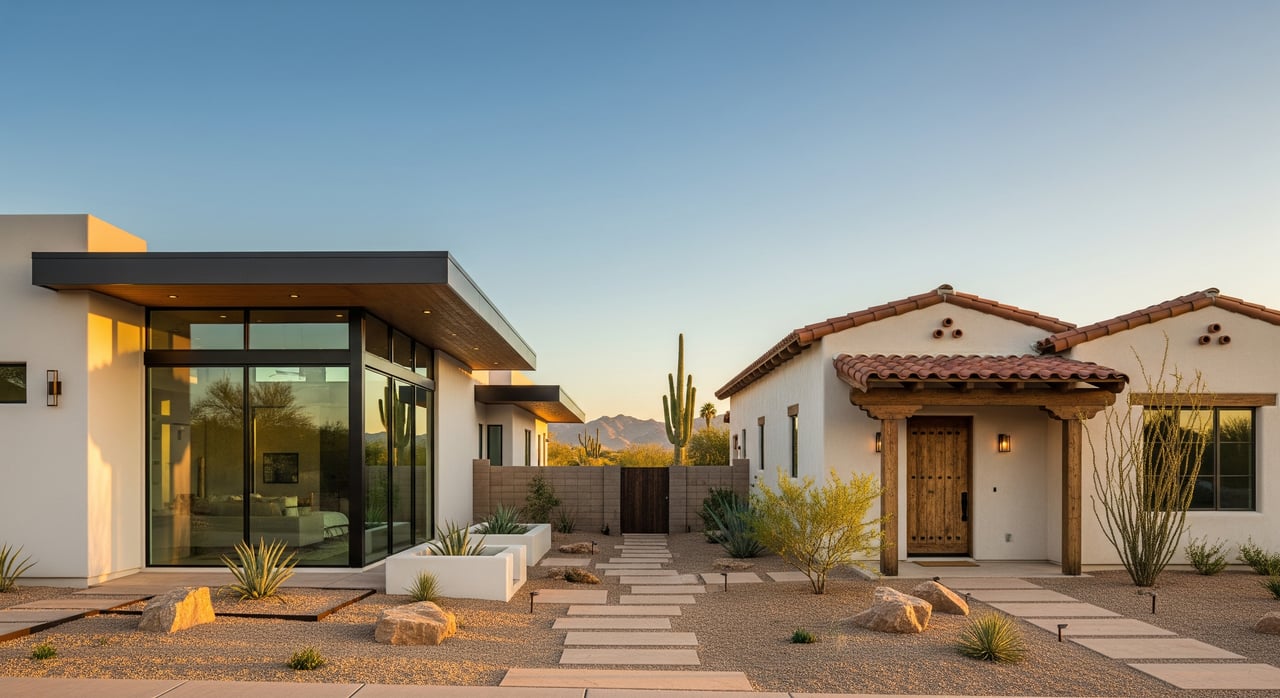
Resale homes can deliver architectural variety, mature trees, and unique features that feel one of a kind. New builds showcase open layouts, large kitchen islands, and flexible indoor-outdoor spaces. Decide whether you value established character or turnkey modern design.
Commute and daily conveniences
Established North Phoenix areas are often close to existing retail, schools, and arterial roads to employment hubs like Deer Valley, Scottsdale, or Downtown Phoenix. Newer subdivisions may be a few minutes farther from central arteries, though many master-planned areas add on-site retail and services over time. Map your daily routes at peak hours to set realistic expectations.
Outdoor lifestyle and views
Proximity to the Phoenix Sonoran Preserve and mountain corridors is a big draw. Newer communities may orient lots to open space and views, while older neighborhoods may offer larger private yards and shade. Think about trail access, privacy, and sun exposure on patios and pools.
Financial and transaction factors
Negotiation and incentives
Builders often start from set price lists and prefer to protect base pricing. They may offer strong incentives such as rate buydowns, closing cost assistance, or appliance and backyard packages, especially in slower months. Resale sellers vary more, and price negotiations depend on local inventory and days on market. Your net deal depends on both price and concessions.
Appraisals and financing
In new communities with fewer closed comps, appraisals can be tricky. Builders sometimes provide data packages to support value. For resale, appraisals are often more straightforward because there are more comparable sales. If a builder has a preferred lender, compare the net benefit after incentives with independent lenders so you capture the best overall terms.
Taxes, insurance, and utilities
Review property tax history and assessed values by parcel, especially for new construction where assessment can phase in. Insurance on newer homes can be lower at first due to new systems and roofs. Electricity may be provided by APS or SRP depending on exact location, and water and sewer are typically municipal. Ask for recent utility averages when evaluating specific homes.
Long-term value and resale potential
The factors that drive future value often go beyond “new vs. old.” Focus on lot quality and orientation, access to amenities and transit, school zones and district boundaries, HOA health and upkeep, and energy efficiency. Well-managed master-planned communities tend to hold value thanks to consistent maintenance. Established neighborhoods with strong tree cover and larger lots are also prized in Phoenix’s climate.
Which option fits your plan?
- Choose a new build if you want modern design, energy efficiency, and community amenities, and you are comfortable with a build timeline and upgrade choices.
- Choose resale if you want a larger lot, mature landscaping, and an established feel, and you are prepared to budget for any near-term system updates or remodel work.
- Choose an inventory new home or a move-in-ready resale if your top priority is moving on a short timeline.
Decision checklist for North Phoenix buyers
Use this quick list to compare specific homes side by side.
- Price comparison
- Compare price per square foot and total cost after builder incentives or seller concessions.
- Add a realistic upgrade budget for new builds and a repair or remodel budget for resales.
- Lot and lifestyle
- Measure lot size and usable outdoor space, including orientation for sun and shade.
- Check proximity to parks, trails, retail, and major roads you use.
- HOA and maintenance
- Confirm monthly dues, what they cover, reserve funding, and any planned assessments.
- Compare community amenities to what you will actually use.
- Timeline and risk
- Align move-in timing with your lease or sale of your current home.
- Review warranty coverage for new builds and inspection results for resales.
- Financing and appraisal
- Request builder lender incentives in writing and compare with outside lenders.
- Ask about appraisal strategy, especially in communities with few closed comps.
- Long-term plan
- Consider five to ten-year plans for household size, work commute, and lifestyle.
- Evaluate resale appeal of the lot, floor plan, and community upkeep.
Local examples to consider
- Master-planned communities in the North Phoenix and North Valley corridor often bundle pools, parks, and trail access with HOAs. Expect contemporary floor plans, energy-efficient construction, and curated streetscapes.
- Established neighborhoods near Desert Ridge, the Happy Valley corridor, or around the Sonoran Preserve can offer larger lots and quick access to retail and dining. Inventory and condition vary, so focus on recent updates and system ages.
Next steps
Your choice comes down to your budget, lifestyle, and timing. A smart approach is to compare a short list of new-home communities with a curated set of nearby resales that match on size, lot quality, and overall cost after incentives or upgrades. I can help you pull neighborhood-level data, line up tours with builder reps, and evaluate inspection and warranty details so you can move forward with confidence.
If you are ready to explore new builds and resales in North Phoenix side by side, connect with me. I will tailor a plan to your budget and timing and guide you through every step, from financing to closing. Reach out to Angela Totman to get started.
FAQs
What costs differ most between new builds and resales in North Phoenix?
- New builds may have higher price per square foot and HOA dues tied to amenities, plus upgrade costs, while resales can require near-term spending on systems like HVAC or roof.
How long does it take to move into a new construction home?
- Inventory or spec homes can close in 30 to 60 days, while built-to-order plans typically take 4 to 12 months or longer depending on permits and builder backlog.
Are HOA fees higher in new communities?
- Not always, but master-planned communities often include more amenities, which can increase monthly dues compared with older subdivisions that have few or no amenities.
Do builder warranties cover everything I need?
- Builder warranties usually cover workmanship for about a year, certain systems for two years, and major structural components for ten years, but you should review exclusions and claims procedures.
Will a new home appraise at the contract price?
- Appraisals can be challenging in newer subdivisions with few closed comps, but builders often provide support materials; established neighborhoods may have more straightforward comparable sales.
Which option holds value better over time?
- Both can perform well; lot quality, location, school boundaries, community upkeep, and energy efficiency typically have a bigger impact on resale than the home’s age alone.